
I'm sure there is some genuine cause for concern, and it's true to say that more affluent parents are more likely to fall foul of the latest food fad since a)they have more money to spend on their children and therefore have greater choice and b) possibly more time to consider the options. (A child in my daughter's class is "allergic" to sandwiches, but eats cakes and biscuits with wheat in...) Certainly middle class tooth decay is no myth, as one comedian observed in his comment on raisins being "middle class crack for kids" our obsession with meeting the "Five a Day" guidelines led many to unwittingly feed their children frequent fruit snacks which were so full of sugar that the incidence of tooth decay soared amongst children of the better off.
The Gwyneth Paltrow's of this world do little to help, and the media should know better than to support the celeb drive for fashionable exclusion diets. Convinced that they "feel healthier" off wheat, gluten or whatever the latest craze is, they apply the same warped logic to their children, thus controlling their diet too. In a world where fast food is ubiquitous and many children are overweight- even obese - I can see they might find this attractive, but they would receive no medical support for this. Perhaps the media should focus their attention specifically on such a group, striving to enlighten and advise rather than tar all allergy parents with the same brush? The way to avoid indiscriminate attacks like today's articles is to write responsibly and include a little factual information at least somewhere in your piece - either that or write for the Daily Mirror...

I wrote here about Free From foods not being a Lifestyle choice - and for many they most certainly are not. Eating "freefrom" food is not a lifestyle choice for the vast majority who do so, it's a no-alternative, medically imposed way of life and to suggest otherwise is both ignorant and offensive. What is really crucial here, is explaining the difference between systemic IgE allergies, and non IgE allergies. They are both allergies, both involve the immune system and neither is an intolerance. Despite being detailed in the NICE guidelines of February 2011 most doctors are still ignorant of Non IgE responses to food proteins, still confusing them with intolerances which involve sugars.
The difference is that non IgE patients don't risk their lives on a one-off encounter with a protein they react to. The reaction will be slower, possibly delayed and more insidious. You can read about it here but the main symptoms are likely to be as follows:-
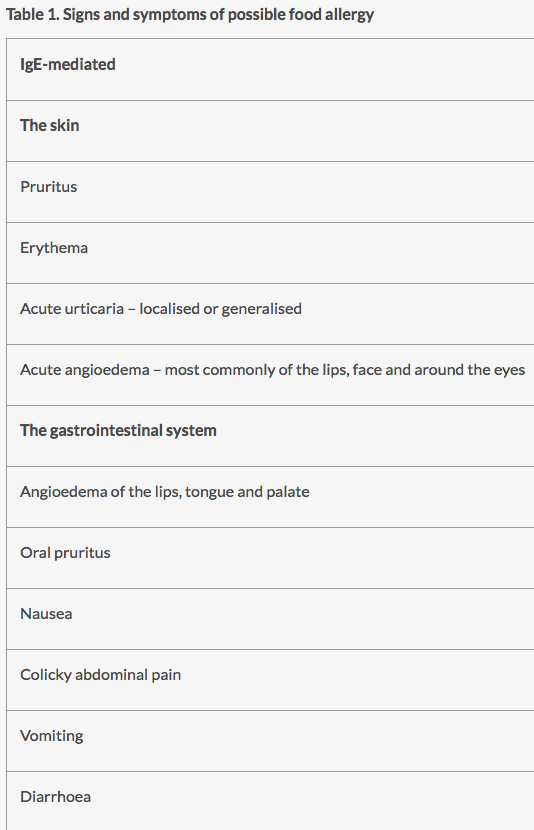 |
| IgE (systemic) allergy |
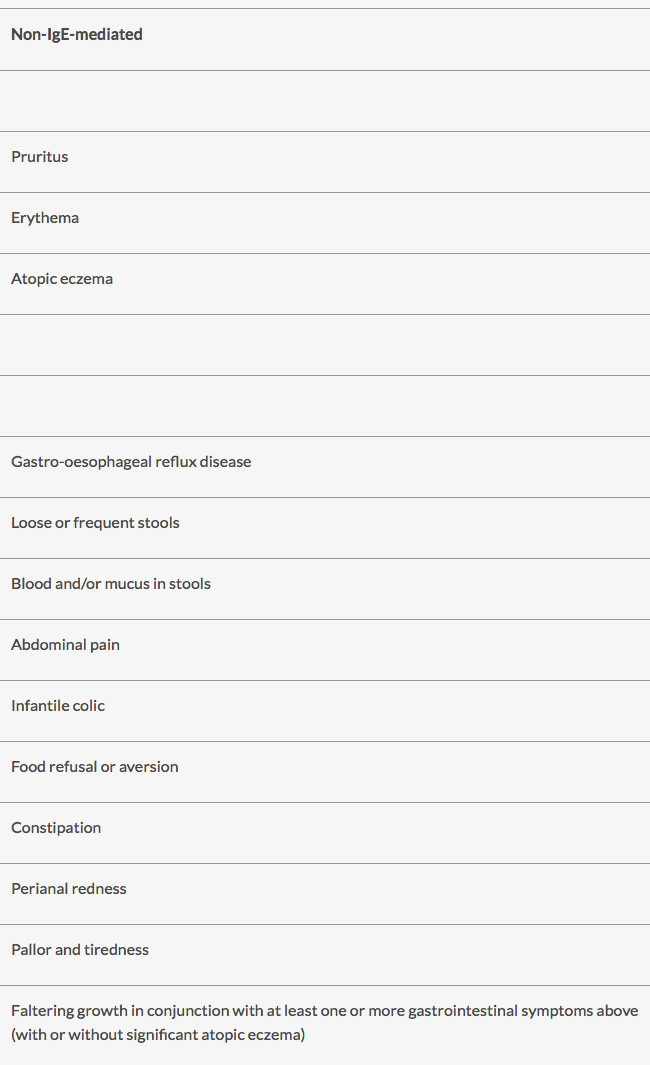 |
| non IgE (local) reaction |
Most frustrating of all, YOU CANNOT TEST FOR NON-IGE ALLERGIES. So there might be no initial reaction, no "waving" - but the sufferer is still "drowning" - having an allergic reaction under the surface.
So I cannot prove to you, here and now, that my daughter reacts horribly to soya. But come and spend a couple of days with us and watch and THEN I can demonstrate to you how she suffers. Telling me she is not allergic because you watched her eat something with soya in and she didn't stop breathing is down to ignorance - not prejudice, and the media should act responsibly and add some degree of education in its articles to avoid perpetuating this awful situation.
For reasons unknown to current researchers and health professionals there is a cluster of cases of this formerly rare disease in the Home Counties and London, and again, for unknown reasons vitamin deficiencies often PRECEDE this condition. There is current research into Vitamin D levels and gut allergies, which needs further funding - which is going to be less likely when such drivel is written in the media. Less than 1% of ALL research funding goes on gastrointestinal conditions, NONE on paediatric gastrointestinal conditions - despite health professionals widely acknowledging that children with chronic gastrointestinal diseases having the poorest quality of life of all chronically sick children.
So whilst there might be some incidence of middle class over reaction to food allergies, just as you would not publish a thesis without some research and a decent evidence base, no health article should be based on hearsay either. The media needs to start exercising some responsibility for what they publish. Articles like this trivialise serious conditions like Eosinophilic Disease instead of educate their readers on how to seek advice if they suspect their child has a problem with a certain food. We need greater awareness (see here) with accurate information which would not only make misunderstanding less likely, but offer greater community to support to those really suffering.


