Friday, 5 June 2015

Not waving, but drowning.

Both The Times and The Telegraph are today running stories on concern over middle class children being starved due to misplaced parental concern over food allergies. Clearly this article has been shared between both newspapers but what concerns me is the complete lack of medical advice or concrete information on the subject amongst the sweeping accusations made. Whilst loosely based on the collaborative report in Sense About Science  on Allergy, it's just another scaremongering article which belongs in the gutter press and helps no one. Indeed, the original report, whilst more balanced, still neglects to described the non IgE food allergies so many - including my family - suffer from.

I'm sure there is some genuine cause for concern, and it's true to say that more affluent parents are more likely to fall foul of the latest food fad since a)they have more money to spend on their children and therefore have greater choice and b) possibly more time to consider the options. (A child in my daughter's class is "allergic" to sandwiches, but eats cakes and biscuits with wheat in...) Certainly middle class tooth decay is no myth, as one comedian observed in his comment on raisins being "middle class crack for kids" our obsession with meeting the "Five a Day" guidelines led many to unwittingly feed their children frequent fruit snacks which were so full of sugar that the incidence of tooth decay soared amongst children of the better off.

The Gwyneth Paltrow's of this world do little to help, and the media should know better than to support the celeb drive for fashionable exclusion diets. Convinced that they "feel healthier" off wheat, gluten or whatever the latest craze is, they apply the same warped logic to their children, thus controlling their diet too. In a world where fast food is ubiquitous and many children are overweight- even obese - I can see they might find this attractive, but they would receive no medical support for this. Perhaps the media should focus their attention specifically on such a group, striving to enlighten and advise rather than tar all allergy parents with the same brush? The way to avoid indiscriminate attacks like today's articles is to write responsibly and include a little factual information at least somewhere in your piece - either that or write for the Daily Mirror...


I wrote here about Free From foods not being a Lifestyle choice - and for many they most certainly are not. Eating "freefrom" food is not a lifestyle choice for the vast majority who do so, it's a no-alternative, medically imposed way of life and to suggest otherwise is both ignorant and offensive. What is really crucial here, is explaining the difference between systemic IgE allergies, and non IgE allergies. They are both allergies, both involve the immune system and neither is an intolerance. Despite being detailed in the NICE guidelines of February 2011 most doctors are still ignorant of  Non IgE responses to food proteins, still confusing them with intolerances which involve sugars.

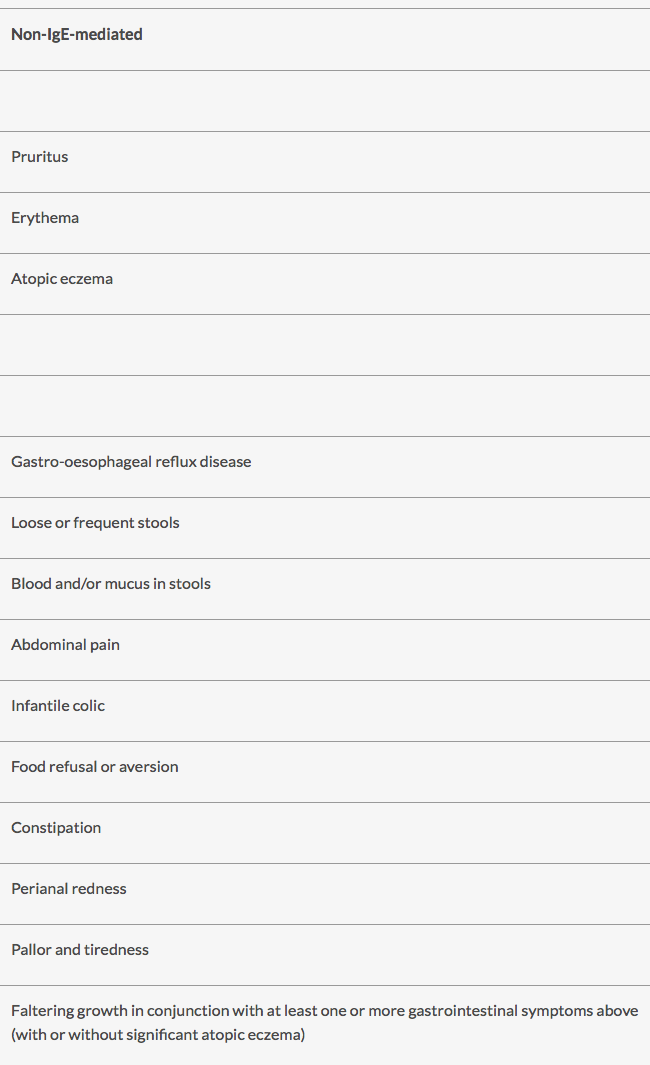
The difference is that non IgE patients don't risk their lives on a one-off encounter with a protein they react to. The reaction will be slower, possibly delayed and more insidious. You can read about it here but the main symptoms are likely to be as follows:-
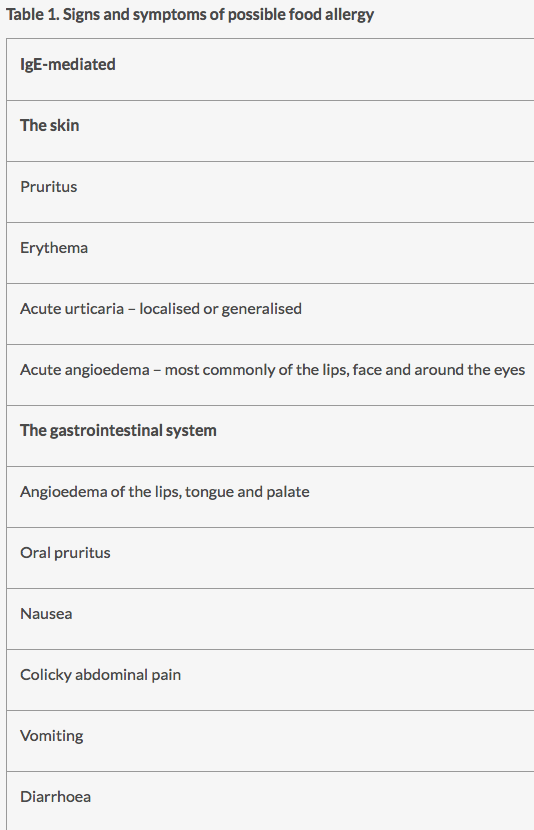
IgE (systemic) allergy


non IgE (local) reaction

Most frustrating of all, YOU CANNOT TEST FOR NON-IGE ALLERGIES. So there might be no initial reaction, no "waving" - but the sufferer is still "drowning" - having an allergic reaction under the surface.

So I cannot prove to you, here and now, that my daughter reacts horribly to soya. But come and spend a couple of days with us and watch and THEN I can demonstrate to you how she suffers. Telling me she is not allergic because you watched her eat something with soya in and she didn't stop breathing is down to ignorance - not prejudice, and the media should act responsibly and add some degree of education in its articles to avoid perpetuating this awful situation. 

My kids have EGID - Eosinophilic Disease. If they eat food their body has a local reaction to then inflammation occurs in the gut. Basic bodily functions such as digestion, absorption and defecation don't happen as nature intended. And that's the VERY short version. EGID is a very unpleasant, poorly understood, emergent disease, with other unpleasant symptoms beyond the gut. It often goes with other disorders too, Hypermobility Syndrome, EDS and (as is increasingly noted) Autism. We have the full house here. For the EGID side of things we are dairy, soya, wheat, gluten free and on minimal egg, beef and other foods. One of my kids used to be tube fed and without a strict exclusion diet he was heading towards bowel surgery due to chronic inflammation and resultant nerve damage.. And we are the lucky ones - I know far too many children who cannot eat at all - some whom the media, in particular the Daily Mail - seek to advertise as rare and bizarre anomalies. Sadly their numbers are dramatically increasing.

For reasons unknown to current researchers and health professionals there is a cluster of cases of this formerly rare disease in the Home Counties and London, and again, for unknown reasons vitamin deficiencies often PRECEDE this condition. There is current research into Vitamin D levels and gut allergies, which needs further funding - which is going to be less likely when such drivel is written in the media. Less than 1% of ALL research funding goes on gastrointestinal conditions, NONE on paediatric gastrointestinal conditions - despite health professionals widely acknowledging that children with chronic gastrointestinal diseases having the poorest quality of life of all chronically sick children.

So whilst there might be some incidence of middle class over reaction to food allergies, just as you would not publish a thesis without some research and a decent evidence base, no health article should be based on hearsay either. The media needs to start exercising some responsibility for what they publish.  Articles like this trivialise serious conditions like Eosinophilic Disease instead of educate their readers on how to seek advice if they suspect their child has a problem with a certain food.  We need greater awareness (see here) with accurate information which would not only make misunderstanding less likely, but offer greater community to support to those really suffering.


Wednesday, 3 June 2015

Lemon and Blueberry Muffins

Here at The Recipe Resource we like our muffins, and blueberry ones in particular. I am constantly tweaking the recipes I use, trying to find that authentic muffin flavour whilst excluding as main of the main allergens as possible. These do have eggs in, but you could swap them for egg replacer since the banana provides additional raising agent. 

Gluten free, wheat free, dairy free, soya free, corn free, nut free, could be egg free


Ingredients

  • 275g / 10 oz safe flour (I used Dove's Farm SR blended gluten free flour)
  • 1 1/2 tsp Baking powder  (omit if you used self raising flour)
  • 125g / 4oz Caster sugar
  • 2 medium eggs
  • 275mls/ 9fl oz safe milk substitute - I used rice
  • 1/2 tsp vanilla essence
  • 2 tsp lemon juice
  • 1 medium ripe banana
  • 75g / 3oz melted and cooled vegetable spread (I used Pure Sunflower)
  • 150g / 5oz fresh blueberries

Method
  • Preheat the oven to 200 C / 400F /Gas Mark 6
  • Sift flour, baking powder (if needed) and stir in sugar
  • In a second bowl beat the eggs (or prepare replacer), milk substitute and vanilla essence. 
  • Mash a banana with a fork and add to the wet mixture
  • Add lemon juice (not before or eggs will curdle)
  • Make a well in the dry bowl and pour in the wet ingredients. (Or mix it all in your mixer)
  • Combine well and stir blueberries in with a fork to prevent breaking them.
  • Spoon into muffin trays (makes 12) and bake for 20 minutes or until golden and firm.


Best eaten warm on the day of baking -  doubt these will last long here, they are very nice!

Saturday, 16 May 2015

3 Ingredient Pineapple Cake

I couldn't believe it when someone share this recipe on the Facebook Recipe Resource wall. I mean, we've tested and adapted a couple of brilliant and really simple cake recipes, but this one tops the lot!! For those unfortunate enough to be allergic to pineapple, stewed brambly apples would work pretty well and I plan to test that soon.

This took a minute to whizz up, 50 minutes to bake and much less for the troops to demolish. There is NONE left. Can't be bad, eh?


Ingredients

  • 2 cups your choice of self raising flour - I used Dove's Farm
  • 1 cup caster sugar
  • 1 440g (large) can of crushed pineapple - or blend a can of sliced pineapple like I did.
Method
  • Blend the pineapple chunks or slices if required. KEEP all the juice, do NOT drain it off
  • Combine all three ingredients well and transfer to a alb loaf tin
  • Bake at 180C (170C in a fan oven) for 50 minutes.
That's IT. 

I doubt it would keep well, but to be honest there wasn't much need here!! One of the best egg free cakes I've come across.


Why we need a culture shift on medical research in children - for Eosinophilic Awareness Week

Yesterday BBC News reported that the Nuffield Council on Bioethics called for “a culture shift in medical research to make sure children can take part.”

I’m sure many would have the (understandable) knee jerk response that using children as guinea pigs isn’t top of their list for culture change, the more extreme response I heard on social media was that this group advocated using children as “lab rats”. Nothing could be further from the truth.

Most new medicines today are designed for adults, with adults as the target user group. Not only does this mean children are faced with fewer options for treatment but doctors have to guess the appropriate paediatric dose for these medicines. Worse still, fewer drugs are licensed for children - and only tertiary level care can prescribe drugs for children without a paediatric license, and then at their own risk. The licensed drugs are not necessarily safer just because they have been around a while either - medical research and knowledge moves fast, the older drugs often give an inferior form of treatment.

Perhaps most worrying is that children break down drugs at a different rate to adults so doctors are really basing their paediatric dose on guess work. The risks involved potential more than outweigh any considered risk of participating in research. You might think this only affects a small percentage of people - but you would be very wrong, and it’s something we are acutely aware of here.


Three of my children have Eosinophilic Gastrointestinal Disease, which as an “emergent disease” doesn’t have a clearly defined treatment protocol. Treatment usually comprises of symptom management and a few more risky options for the worst affected. For their reflux, all three are on proton pump inhibitors. At the maximum dose - and have been for YEARS. There is no license for that, no data for long term use in children, so we agonise regularly over the decision to keep them on these medicines. Then there are the pain medicines - the dosage difficult to titrate and resulting in neutropenia (low white blood cell count) and other health risks.

Next week is Eosinophilic Awareness Week, a debilitating condition involving non IgE allergic responses to food and environmental proteins, now thought to be autoimmune in nature. You can read about EGID here and on the FABED charity site here.


So this BBC news article was really relevant to us.

Gastro research is drastically UNDER FUNDED. It is not "glamorous" and rarely on the radar for celebrities and focus groups, and rarely attracts public interest unlike cardiac care and cancer research. Gastro conditions are badly neglected in the UK when it comes to research funding allocation but without research treatment and outcomes are not likely to improve much.

Approximately 1% of the total amount of medical research funding available in the UK can be accessed for Gastro research. There are currently no listed projects specifically for Eosinophilic Disorders on the National Research database. Gt Ormond Street Hospital have a Gastro Research Project that will include related conditions/problems and FABED is the main UK charity supporting families with members (adult and children) who suffer from eosinophilic disease.


FABED are also the UK partners supporting the United States Eosinophilic Awareness Week next week, coordinated by APFED. Two years ago they made this video to promote awareness. Read more about Eosinophilic Diseases here.

So next week, do something to raise awareness. Tell someone about EGID and the appalling lack of funding for gastrointestinal disorders in the UK. Discuss the ethics of testing drugs on children and don't make knee jerk responses to new reports. Because as Prof Modi said this week: "Of course decisions involving children are never easy, but this should not be an excuse for inaction; the danger of not developing the evidence base is far greater than the risks of recruiting young people to well-run, carefully regulated programmes."

Tuesday, 5 May 2015

Crunchy Millet Flapjack/Granola style Biscuits

Once again our Facebook Group has come up trumps and member Livy Dickinson has created a fab recipe for her daughter, who is on a few food diet.  Searching for something palatable, portable and safe she has come up with the following, a crunchy granola style bite (could be a bar) which is really tasty,


Ingredients

  • 250g Millet flakes 
  • 150g Coconut oil 
  • 125g Brown sugar 
  • 4/5 tbsp Golden syrup 
  • (2 tbsp dried blueberries- optional) 

Method
  •  Simply combine and either spread in a tin (as in picture) or in paper cases/greased cupcake wells
  • Bake at 180C for approx 20mins @ 180. 

These are hard/ solid/ crunchy, not soft and squidgy like usual flapjacks. They're very like Nature Valley Crunch bars in texture, so not suitable for very young children.

Tuesday, 28 April 2015

Homemade Granola

My daughter decided she wanted to make her own granola, fed up with watching her older brother eating Country Crisp no doubt! I searched online for some ideas and we came up with this, but you can put pretty much whatever you like in! The main thing is to (mostly) coat the oats before baking.


Ingredients

  • 2 tbsp vegetable oil
  • 125ml maple syrup
  • 2 tbsp honey
  • 1 tsp vanilla extract
  • 300g gluten free rolled oats
You really can add as many or as few of the following ingredients as you like. The above are essential, although I would reduce the oil and syrup slightly if omitting most of the seeds and berries.
  • 50g sunflower seeds
  • 50g pumpkin seeds
  • 100g raisins
  • 100g dried berries 
  • 50g desiccated coconut


Method

  • Heat oven to 150C 
  • Mix the oil, maple syrup, honey and vanilla in a large bowl. 
  • Tip in all the remaining ingredients, except the dried fruit and coconut, and mix well. 
  • Tip the granola onto two baking sheets and spread evenly. 
  • Bake for 15 mins, then mix in the coconut and dried fruit, and bake for 10-15 mins more. 
  • Allow to cool
  • Can be stored in an airtight container for up to a month.


Wednesday, 22 April 2015

Allergy Awareness Week and #livinginfear - top tips for teachers

This week is Allergy Awareness Week and this year Allergy UK are focussing on the fear most people with severe allergies live in every single day of their lives.

Did you know?

BRITAIN is in the grip of a major allergy crisis, with millions of sufferers at risk of dying because of a terrifying lack of life-saving awareness among the public? And those not at risk from life threatening allergic reactions are living compromised lives in fear of chronic pain and illness?


Allergy UK are raising awareness of the fears of allergy sufferers this week and are asking people to get involved on Twitter. You can join the awareness campaign on Twitter using the hashtag #livinginfear and tweeting a picture of yourself with your biggest fear. My allergies are hugely restricting though and have had a massive impact on my life- and continue to do so. But as a mum, my biggest fears are for my children, who are more profoundly affected by allergy. 
So here's my photo:-


Children with food allergies can feel isolated in school as well as elsewhere. So much of their lives, of our society revolves around sharing food. And as with children who suffer from disabilities or chronic illness children with food allergies often lack independence. Food is a basic human need, but for kids with food allergies this basic daily task is fraught with anxiety and the need for constant vigilance. It’s also a fundamental step in growing up to gradually sever the feeding bond with your mum, but imagine if your mum was the only person you could trust to feed you? It’s pretty restricting. My nine year old twins rely on me totally for their food, school cannot cater for them and neither it seems can anywhere else. They are most definitely very “attached” to me still, and I now understand why. (You can read more about food allergy and independence here.)

Isolation in school is a particular concern for me, my children are mostly well accommodated in school but cannot participate in cooking sessions, many trips, school lunches etc and constantly feel "different". Other parents are anxious about inviting them home to play as food is such an integral part of entertaining, and consequently they feel even more isolated in school.

So here are my "Top Tips" for teachers (I was one once too!) to help reduce isolation in school:-
  1. Plan ahead. Most mums of kids with allergies will bend over backwards to help their child and will be only too happy to provide ingredients, advice and reassurance. (Just don’t contact them late the night before you are baking to request a list of ingredients!)

  2. Listen. Mums really do know their children best and are usually just following instructions from health professionals. Whilst there are undoubtedly a few who are over anxious and possibly ill-informed the vast majority will have genuine concern and want to keep their child safe - whilst not wanting to restrict the enjoyment of any other child in the class.

  3. Keep food treats in school to a minimum, or (as our children’s teachers did) plan ahead and ask for a safe treat for the allergic child.

  4. Ensure safety doesn’t stop fun. It’s vital all children are safe in school, but that doesn’t mean children cannot have fun. Safety must also be age appropriate too. So at age nine my twins can cope with baking something they know they must not eat, but are supervised when they do. A Reception age child could never cope with this! Similarly, making the child who carries an Epipen for a dairy allergy your class milk monitor isn’t a very wise idea!! (It happened to us though!)

  5. Avoid making the child who IS different feel different. Pretty obvious, but subtlety is key. Substituting safe chocolate in the class advent calendar and making a note of the date for the allergic child to take it is far, far better than leaving them to come to you to swap their treat in front of others.

  6. Food still needs to be fun though, and even children with allergies need positive experiences with and around food. You can substitute many ingredients easily, there are recipes for children on exclusion diets on The Recipe Resource ( http://thereciperesource.blogspot.co.uk) and lots of other sites too!

  7. Tackle the “Healthy Eating” message tactfully. With recent research to demonstrate that fats are not always the bad guys, the message is becoming slightly blurred anyway, but children with food allergies are missing important proteins from their diet, and often important fats too. Our twins were wisely told by a senior dietician that they need plenty of fatty foods like chips, and oils like olive and hemp oil in their diet as they are dairy free (amongst other things) and miss the natural fats present in dairy food.

  8. Don’t judge. I was once asked why there were concerns about my daughter’s growth when she was clearly very chubby, and that she looked really healthy. Children are all different, but children with food allergies, especially the non IgE ones are prone to poor growth. Poor absorption leads to poor growth - and the body needs to gain mass before it is able to grow upwards. My kids were short and chubby for a long time, sadly it wasn’t a sign of health at all. It’s stressful enough as a parent to navigate life with a child with food allergies, judgement from others is hard to take.

  9. Expect to see more of the parents of kids’ with food allergies. They are not overly fussy, and need reassurance as much as their children. They are your best allies for a smooth year with an allergic child in your class, and dislike being the “bad penny” often feeling embarrassed ad in the way. Any reassurance is much appreciated!

  10. Educate. Obviously - you’re a teacher :) But a tiny bit of knowledge for the allergic child’s peers goes a long way to helping them feel one of the class. There is a simple explanation aimed at Key Stage 1 children here.

Allergies have a serious impact on sufferer's lives, and they are certainly life changing, but we can and should limit the fear they live in. Unfortunately the current situation is almost unbearable for some, and as the excellent article in The Guardian last week explains ignorance about allergy is not helping. This is why awareness is key.

Related Posts Plugin for WordPress, Blogger...